THANK YOU FOR SUBSCRIBING

Be first to read the latest tech news, Industry Leader's Insights, and CIO interviews of medium and large enterprises exclusively from Logistics Transportation Review

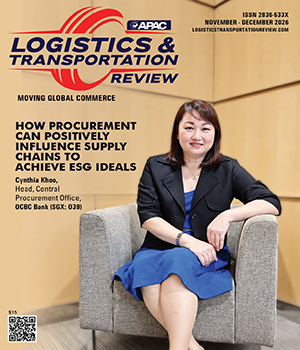
Companies looking to positively influence supply chains to gain the desired environmental, social, and corporate governance (ESG)-related outcomes would do well to begin the journey by developing a rigorous Supplier Code of Conduct (CoC) that sets out key expectations across the most pertinent areas. These would include compliance with the law, business integrity and ethics, human rights, health, safety and environmental protection. By making this the starting point, a company is sounding out the posture and attitude its suppliers are expected to uphold and defend. When this is firmly in place, everything else can be reasonably expected to fall into place. This has been our experience at OCBC Bank (Malaysia) Berhad. Once the CoC has been understood by our suppliers, we have been able to seamlessly ensure that our procurement discipline incorporates the use of recycled materials, green certifications and energy efficiency of equipment, among others. We cannot emphasise more how vital it is for the CoC to be incorporated into the supplier onboarding process, which should then be acknowledged by suppliers before an engagement can commence. Sustainable Procurement The assessment of supply chains is best carried out by establishing environmental and social performance indicators for all vendors with regular progress monitoring, by conducting capacity-building programmes and by facilitating knowledge-sharing. Companies might find incorporating ESG weightages and due diligence checks in the procurement of products and services in this manner to be most beneficial. In recent times, companies have become more conversant and drawn into progressively placing greater emphasis on procuring environmentally friendly products and services over others during the screening and selection of suppliers. This is a good sign but there is still a long way to go before the desired take-up rate is achieved. Toward achieving this end, we believe that the CoC should firmly go
Kazunari Ogawa, President and CEO; Hiroyuki Hibino, Executive Officer and General Manager of the International Business Planning and Promotion Department
Yasuda Logistics Corporation has spent more than a century earning trust in moments when logistics cannot be treated as routine. Founded in Yokohama in 1919, it has grown across Japan and Asia while staying close to what customers need. By working alongside them across the logistics journey, Yasuda gives them clarity about who is responsible when a shipment crosses borders, changes hands and moves through several stages before reaching its destination. Its global network makes that responsibility easier to manage. Warehousing, forwarding, customs clearance, transportation and coordinated delivery services come together through a single point of coordination. Customers no longer have to piece together information from multiple providers. They gain greater visibility across the journey and confidence that every stage is moving toward the same outcome. Yasuda’s collaboration with Zenport strengthens that visibility. The cloud-based trade and supply chain management platform helps customers monitor movements across the logistics network. Yet coordination alone is not what customers remember. They value having a logistics partner that understands what they are trying to achieve and adapts accordingly. Yasuda begins by identifying each customer’s priorities, potential risks and operational requirements, then shapes the solution around those realities rather than fitting them into a standard process..

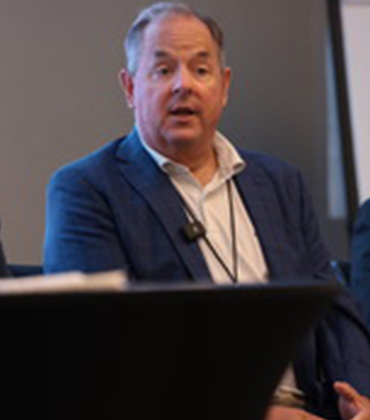
Pat Martin, Founder, Dan White, Founder and Advisor
The global supply chain market (SCM) is an untapped gold mine, valued between $20.98B and $36.72B and projected to surge to $194.28B by 2033. Cloud-based SCM alone could reach $23.4B by 2027. Pressure on the system is mounting from volatile demand, geopolitical shocks, cost-cutting mandates, and outdated infrastructure. Technology, ranging from AI-powered data unification to real-time freight tracking and fraud prevention, acts as the release valve, enabling the supply chain to run faster, smarter, and more resiliently. But in a market this complex, you need industry specialists who have charted these waters before and turned strategic bets into outsized wins. That navigator is Venture 53, a pure-play fund dedicated to supply chain technology. Since its inception, it has focused on spotting bold, visionary founders tackling the industry’s toughest challenges and guiding their growth, delivering stronger outcomes and better exits for investors. The firm’s early investments have already generated returns, fueled by the backing of its 45+ Limited Partners (LPs). These LPs include freight veterans who have lived the industry from the inside out, outsiders from adjacent sectors like CPG who understand adoption dynamics, multi-generational builders with deep operational expertise, and visionaries who have built, scaled, and exited major companies. Together, they know which supply chain technologies will scale, which will stall, and how to position them for success. With deep domain expertise and a tightly aligned support network, Venture 53’s fund model is built to accelerate execution and amplify outcomes across supply chain investments. Fast Returns, Fierce Tech Bets Venture 53 has already raised three funds to date. Several of those portfolio companies have redefined the freight and supply chain landscape, solving multi-billion-dollar problems with defense-grade technology and AI-driven intelligence. “We’re on track to return all our investors’ capital in under three years, which is unheard of. That speaks to both execution and resilience,” says Pat Martin, founder. At present, the company is actively preparing for its next round of capital deployment, refocusing on seed and Series A. With its previous funds fully invested, the company is excited to back the next wave of bold, innovative startups transforming supply chain tech. Proof in Performance Venture 53 has built a proven support system for founders, aligning them with seasoned mentors and analysts who identify where emerging technologies fit in the market. A key focus is using technology to unify jagged freight data, enabling faster scaling and quicker adoption by customers.
The future of port operations is now. Intelligent systems and adaptive digital tools are shaping a more responsive and resilient terminal environment. MAXTECH is leading this effort by delivering advanced engineering and practical innovation. A pioneer in applying AI across the port, marine and offshore engineering sectors, it builds cranes, lifting technologies and complete material-handling packages. It blends intelligent features and integrated systems to create solutions aligned to each customer’s needs, helping ports adopt modern technology without disrupting existing workflows. “We don’t just manufacture quality equipment. We deliver a comprehensive, adaptive and reliable partnership that drives operational excellence,” says Alina Zhang, sales director. Product development at MAXTECH follows a customer-centric cycle that turns operational needs into applied solutions. It begins with a conversation with the customers to fully understand their working demands. These requirements are translated into solutions that reflect field requirements instead of theoretical assumptions. MAXTECH’s production system is built on structured R&D, detailed modeling and controlled fabrication. Its engineering team utilizes 3D modeling to refine structures and uses finite element analysis simulation to test significant loads and dynamic forces. Programmable logic controller-based hydraulic and electrical integration helps smoother response during operation. Advanced technology features are integrated into products to equip clients with improved control in demanding environments. Remote monitoring, load indication and anti-sway systems help operators work with greater stability. Its offshore and marine crane includes an AI-powered load optimization function that reduces fuel consumption. MAXTECH plans to introduce its first lifting robot in 2026, moving the marine and offshore industry toward autonomous lifting systems with self-learning and judgment capability. By developing equipment rooted in practical capabilities, MAXTECH helps clients tackle complex challenges in the industry with ease. One persistent issue port operators face is in loading and unloading goods from larger vessels. The limited reach of cranes often makes it challenging to access the farthest container rows on the ship. Its patented Articulated Parallel Spreader addresses this by extending the working radius by up to two meters, eliminating the need for costly structural changes. With a 60-day production and delivery window, it limits operational disruption and allows ports to resume full activity faster.

3PL and 4PL Service
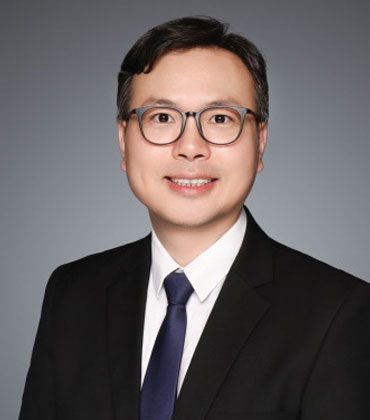
James JIAN, Head of Transportation, Package & Warehouse Management, Continental
Cold Chain

Michael Papenfuss, Senior Manager, Logistics and Safety, Material Transport, Inc.
Freight Forwarding
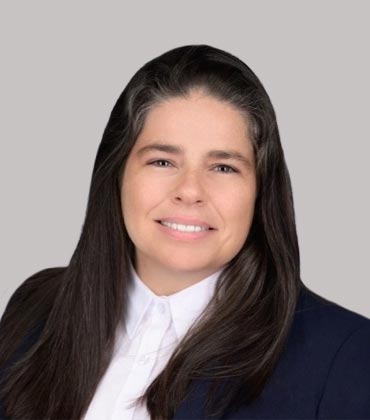
Harmony Mulcahey, Director of Hospitality & Procurement/Supply Chain, Pineapple Hospitality Group
Material Handling System

Dave Hansen, Director of Supply Chain, Guzman y Gomez Mexican Kitchen
Logistics Management
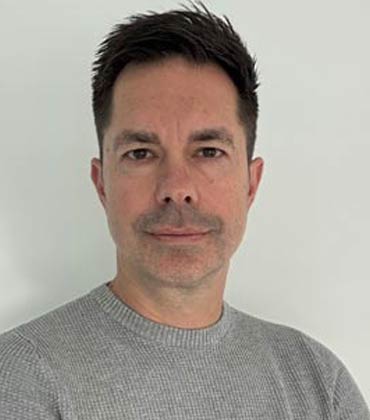
Stuart Darby, Managing Director – Oceania, Gebruder Weiss

Cold Chain
Troy Highland, Vice President of Transportation, accelerate360/McClatchy Retail Network
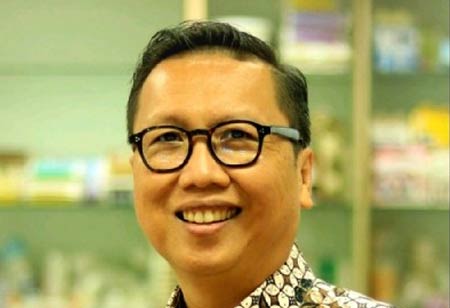
Cold Chain
Ronni Rombe, Director of Supply Chain Procurement QA RSG, McDonald's Indonesia [NYSE: MCD]
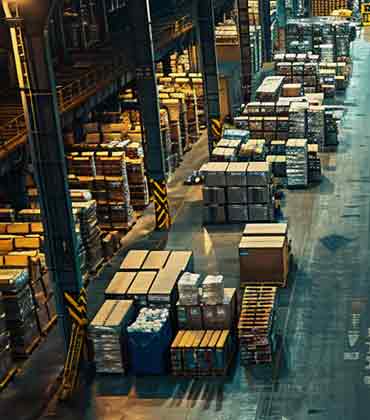
Warehousing and transportation services improve inventory management, logistics efficiency, supply chain visibility and business growth in global markets.
Remote fleet maintenance solutions help APAC operators address data, connectivity, coordination, and regional challenges in maintenance planning and triage.
Building Resilient Logistics through Integration and Leadership
Yasuda Logistics Corporation is recognized as the Top Warehousing and Transportation Services in APAC 2026. Founded in Yokohama in 1919, Yasuda handles warehousing, international forwarding, customs clearance, transportation and distribution for its customers. Its services cover specialized cargo handling, shipment planning and digital tracking supported by its collaboration with Zenport. The company has coordinated broadcasting equipment for approximately 50 venues during a major Japanese sporting event and developed specialized medical logistics capabilities. Both assignments demonstrate the importance of careful preparation when shipments involve complicated schedules and specific handling requirements.
Contributor James Jian, Head of Transportation, Package & Warehouse Management at Continental, examines how digital technology, connected data and logistics partnerships affect everyday operations. Drawing on his experience with IoT-enabled cargo tracking, robotic process automation and integrated transportation platforms, he explains how companies can track shipments, cut repetitive tasks and identify potential disruptions earlier. He also discusses why logistics providers need to adjust their services to regional operating conditions and individual customer requirements.
Troy Highland, Vice President of Transportation at accelerate360/ McClatchy Retail Network, shares lessons from his military service and corporate transportation career. He emphasizes employee development, tracking performance improvements and communicating clearly so teams understand their responsibilities and work effectively. Highland also encourages companies to recognize the business value of their supply chain operations instead of treating logistics primarily as an expense to manage.
Across these stories, reliable logistics comes down to having the right information, people and services available when they are needed. The perspectives examine how companies across APAC can handle disruptions, coordinate deliveries and maintain dependable supply chains while responding to changing customer expectations.