
THANK YOU FOR SUBSCRIBING

Be first to read the latest tech news, Industry Leader's Insights, and CIO interviews of medium and large enterprises exclusively from Logistics Transportation Review



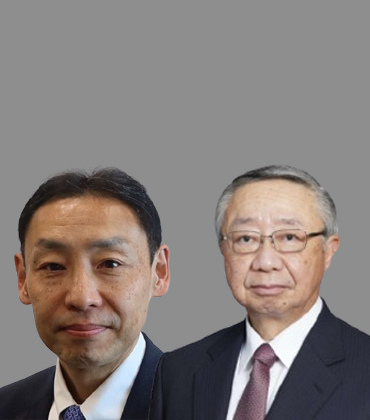 Hiroyuki Hibino, Executive Officer and General Manager of the International Business Planning and Promotion Department; Kazunari Ogawa, President and CEO
Its global network makes that responsibility easier to manage. Warehousing, forwarding, customs clearance, transportation and coordinated delivery services come together through a single point of coordination. Customers no longer have to piece together information from multiple providers. They gain greater visibility across the journey and confidence that every stage is moving toward the same outcome. Yasuda’s collaboration with Zenport strengthens that visibility. The cloud-based trade and supply chain management platform helps customers monitor movements across the logistics network.
Yet coordination alone is not what customers remember. They value having a logistics partner that understands what they are trying to achieve and adapts accordingly. Yasuda begins by identifying each customer’s priorities, potential risks and operational requirements, then shapes the solution around those realities rather than fitting them into a standard process.
“We take full responsibility for the logistics so customers can stay focused on their own operations,” says Hiroyuki Hibino, executive officer and general manager of the international business planning and promotion department.
Yasuda does not wait for cargo to move before improving how it will arrive.
A major Japanese contractor recognized the value of that approach when sourcing steel from China for construction projects in Japan. Brought in after the blueprints were finalized, Yasuda assessed cargo characteristics, shipment schedules and delivery requirements before advising on key decisions such as the port of discharge. Looking at the movement end-to-end allowed the company to optimize the journey before execution began.
Planning discipline matters just as much when scale increases. For a major sporting event in Japan, broadcasting equipment arriving from China was consolidated, stored and inspected at Yasuda's Nagoya warehouse before being distributed to around 50 venues nationwide and later returned to China. Managing the full cycle as one operation reduced complexity and gave the customer a clearer view of the process from beginning to end.
Customer Needs Shape the Business
Customers have shaped Yasuda’s business in practical ways, often by bringing problems that existing logistics methods could not solve.
In the 1980s, importers of suits from abroad found that conventional boxed transport left garments deformed before they reached stores. To address this challenge, Yasuda introduced hanger containers with interior fittings customized to meet customer requirements. The containers made loading and unloading easier for workers, provided effective thermal insulation, and kept suits hanging throughout transit, helping preserve their shape and condition. The solution reflected a principle that still guides the company. Yasuda understands the outcome the customer needs, then adapts the logistics around it.
Today, the listening continues through regular customer meetings and an annual satisfaction survey. When concerns arise, Yasuda follows up directly and adjusts its approach. Changing requirements have also guided newer capabilities, including its Haneda Logistics Center opened in 2026 for medical logistics.
Customers often describe the result as peace of mind, while also pointing to the support of Yasuda’s on-site teams. The experience reflects a group-wide philosophy centered on accuracy, speed and care.
As customers expand internationally, Yasuda is broadening its own network so the same end-to-end support can follow them into new markets. Its commitment to long-term relationships also extends locally. Monthly cleanup activities around its Tokyo head office since 2017 earned Yasuda the 2023 Special Award for Minato City Landscape Town Development. By listening closely and evolving around customer needs, Yasuda continues to strengthen the trust behind its recognition as the Top Warehousing and Transportation Services in APAC 2026.
| Share this Article: Tweet |
Company
Yasuda Logistics Corporation
Management
Hiroyuki Hibino, Executive Officer and General Manager of the International Business Planning and Promotion Department; Kazunari Ogawa, President and CEO
Description
Yasuda Logistics Corporation is a logistics and transportation company with roots in warehousing since 1919. It provides integrated services spanning warehousing, international forwarding, transportation, customs, distribution and specialized logistics. Through its expanding global network, Yasuda helps businesses manage complex supply chains with end-to-end coordination, visibility and customer-focused solutions.
